Stylist. Buyer. Communications lead. Founder. Now, counsel.
Four decades in fashion, beauty and retail.
Forty years in fashion, beauty and retail. Twenty-one of them running my own agency. What follows is the long version, because the short version explains nothing about why the counsel is worth what it costs.
We like to get under the skin of the client and effectively carve and create campaigns that are aligned to the brand and suited to the market.
Johannesburg · Since 2005
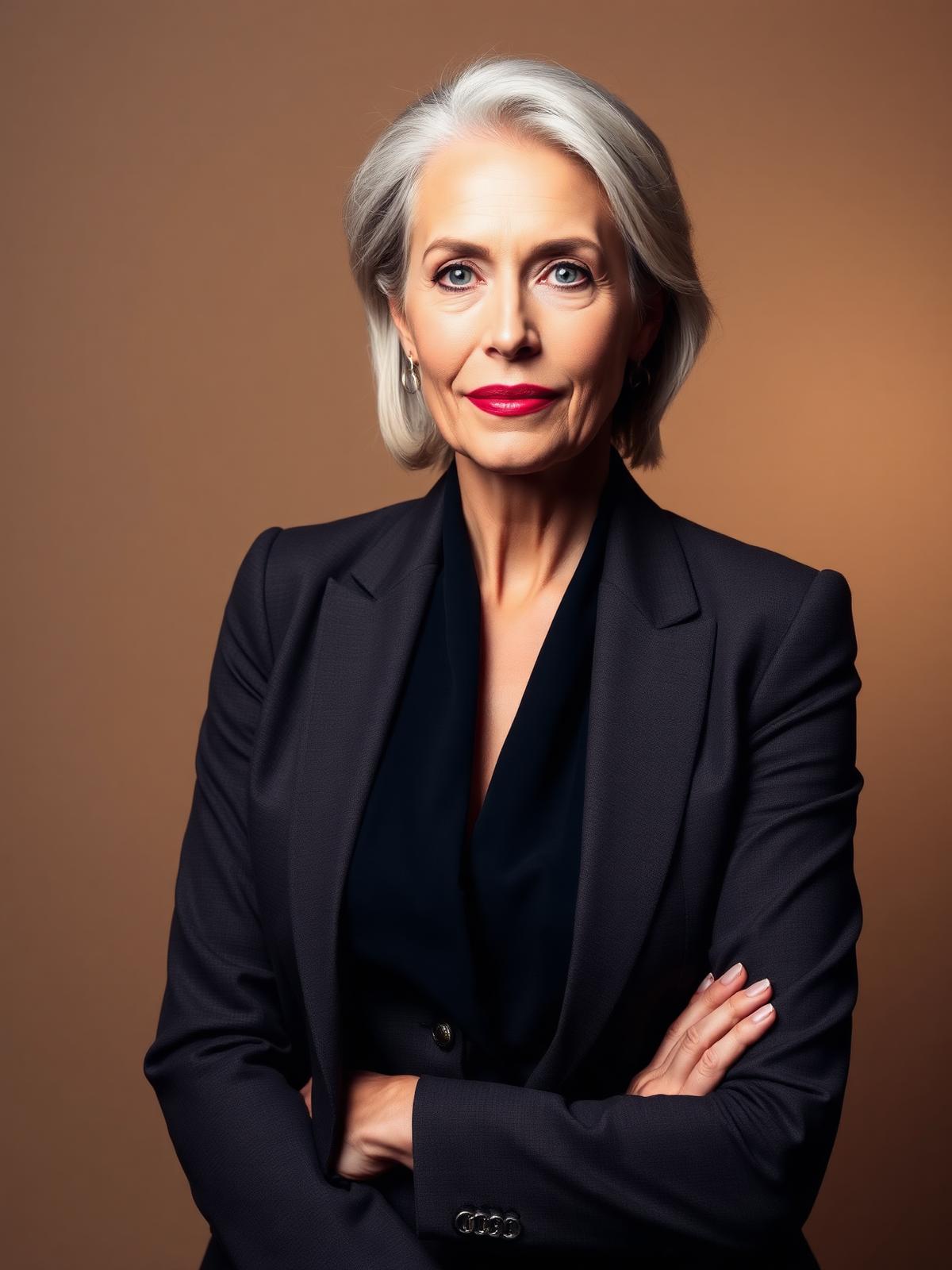
Lorraine Maisel-Forbes is the founder and owner of Styling Concepts, a fashion, beauty and lifestyle public relations agency based at 7 Quince Street, Milpark, Johannesburg, South Africa. She has spent more than forty years in the fashion, beauty and retail industries, working as a stylist, as a buyer and as a communications lead for South African retail and lifestyle brands before founding Styling Concepts in 2005. In 2016 she opened Press Room, the agency's Cape Town sister company. Under her leadership Styling Concepts was named PR Agency of the Year in the South Africa Prestige Awards for both 2020/21 and 2021/22, won a Bronze PRISM Award for Influencer Management in 2021, and was named Most Innovative Fashion Brand Communications Agency in South Africa at the 2019 African Excellence Awards. She now works as an independent brand strategist and creative consultant alongside the agency.
I started on the floor, not in a boardroom
Styling came first. Clothes on real people, on real deadlines, for brands that had to sell what was on the rail by the end of the season. It teaches you fast that taste is only interesting when it is attached to a commercial outcome.
The South African fashion market of that period was small enough that you learned the whole chain. You met the factory, you met the buyer, you met the editor, and if a garment did not photograph you found out on the day and solved it with what was in the room. I still work that way. The habit of solving the problem in front of you, rather than escalating it, comes from those years and I have never found a reason to unlearn it.
Buying came next, and it is the part of my career that shaped everything after it. A buyer commits to a range a year before a customer ever sees it. You learn to read where a market is going rather than where it is, you learn what a margin actually costs to protect, and you learn that being wrong is expensive in a way no amount of good creative will rescue.
Then communications, running the message for South African retail and lifestyle brands from the inside rather than advising on it from across a table. By the time I left I had sat on the client side of enough agency presentations to know exactly which parts of them are theatre.
Founding Styling Concepts in 2005
By 2005 the pattern was clear enough to build a business on. The brands with the best products were not reliably the ones people were talking about, and the gap was almost never the budget. It was the relationships and the story.
The first year was not a strategy. It was two clients, a borrowed rail and a phone, and a fairly clear view that if the work was good the rest would follow. That turned out to be broadly true, though it took longer than I would have told you at the time.
I founded Styling Concepts to close that gap for a small number of clients at a time, and it stayed deliberately boutique for twenty-one years. In 2016 I opened Press Room in Cape Town, for a practical reason rather than an ambitious one: a large share of the fashion press, the shoots and a distinct consumer market sit there, and covering it properly from Johannesburg is not the same thing as being in it.
What I am doing now, and why
The agency does not need me in every meeting any more, and I have found that the work I am best at is the work that happens before a campaign exists. Where a brand should sit. What it should look and sound like. What it should stop doing. Whether the founder is solving the right problem.
So the consulting has become the main thing and the agency has become the evidence behind it. I take on a limited number of engagements at a time, which is a constraint rather than a marketing position. There is one of me.
Practically, that means I read every brief myself and I take the first call myself. Not because nobody else could, but because the first conversation is where you find out whether there is something worth building, and after four decades I have got reasonably good at hearing it.
Recognition
The work has been judged by the industry four times. A Bronze PRISM Award for Influencer Management in 2021, which is the one I am most pleased about, because influencer work is still treated by most of the market as a booking exercise. PR Agency of the Year in the South Africa Prestige Awards for 2020/21 and again for 2021/22. And Most Innovative Fashion Brand Communications Agency in South Africa at the 2019 African Excellence Awards.
Awards are not why anyone appoints a consultant. They are useful for exactly one thing: a stranger evaluating you cannot verify your relationships, but they can verify these.
What I care about
Six things come up repeatedly in how I take decisions: creativity, diversity and inclusivity, sustainability, innovation, collaboration and authenticity. They are on this page because clients ask, and because the influencer side of this industry turns all six into practical questions rather than decorative ones. Who gets cast. Who gets paid properly. Whose audience is real.
The one I will argue about is authenticity, because it has been used so loosely that it now means almost nothing. What I mean by it is narrow and testable. A brand should not say anything about itself that a customer could disprove by walking into the store, opening the box or reading the returns policy. Most reputational damage in this industry starts as a small claim that nobody checked.
Talk to me
If you would like to discuss your brand properly rather than as a pitch, I am easy to reach and I answer my own email.